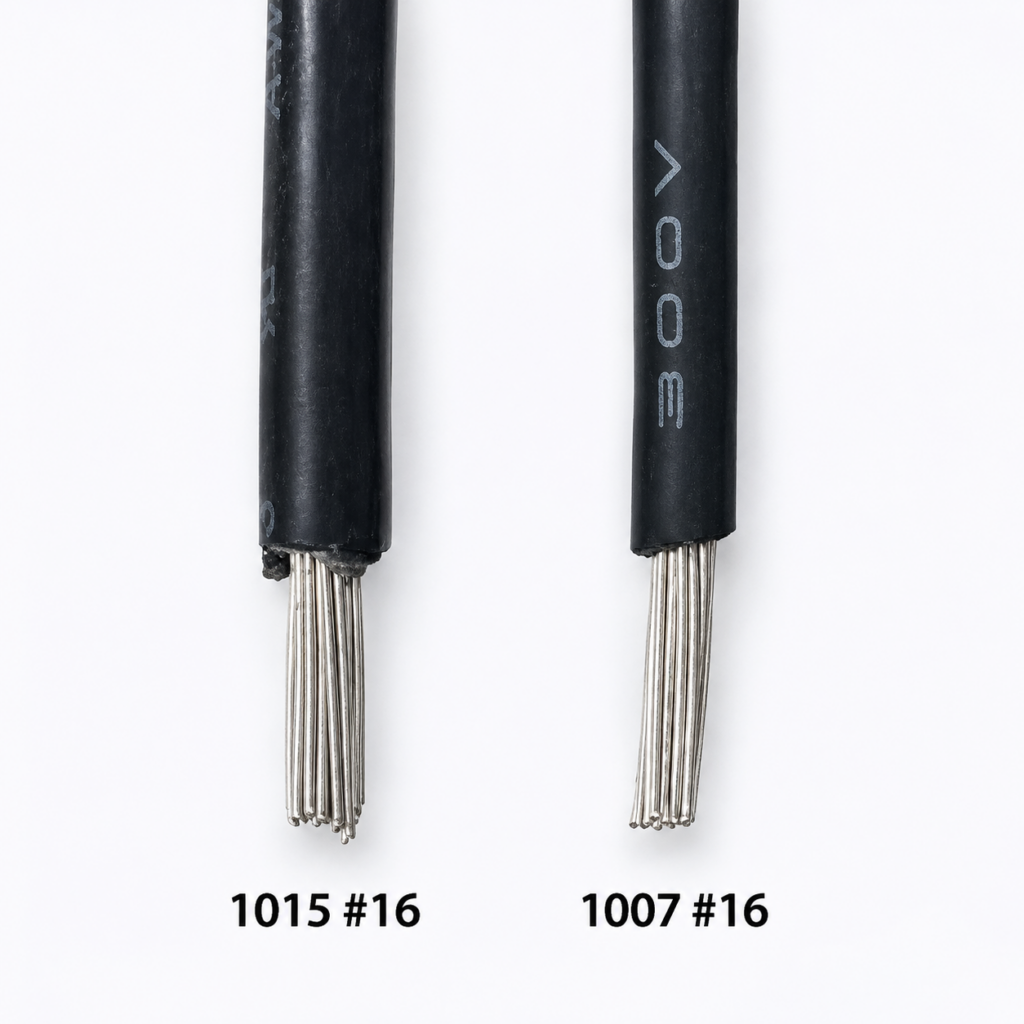
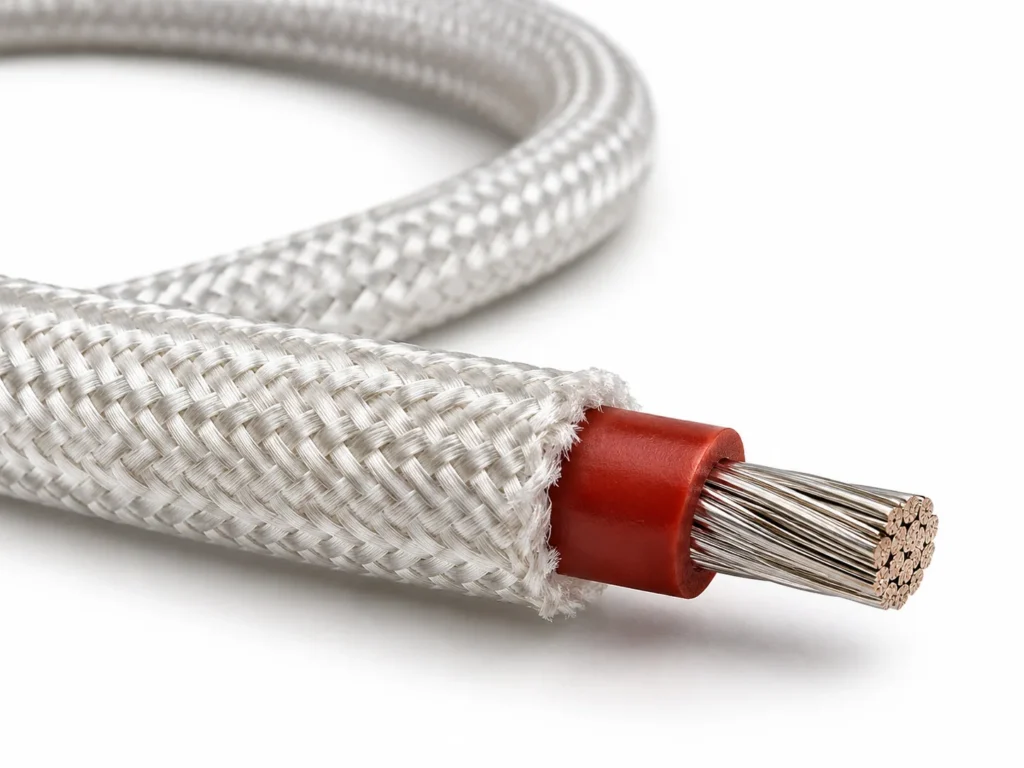
A four-wire connector lead and a multi-branch harness may share the same cutting and crimping steps, but the drawings and manufacturing challenges are different.
The terms terminal wire assembly, wire harness and cable assembly often overlap in purchasing documents. To understand what you need, look beyond the name: What is the starting material? How are the ends terminated? Does the part need a defined route inside the equipment?
Terminal Wire Assemblies: Start With Individual Wires
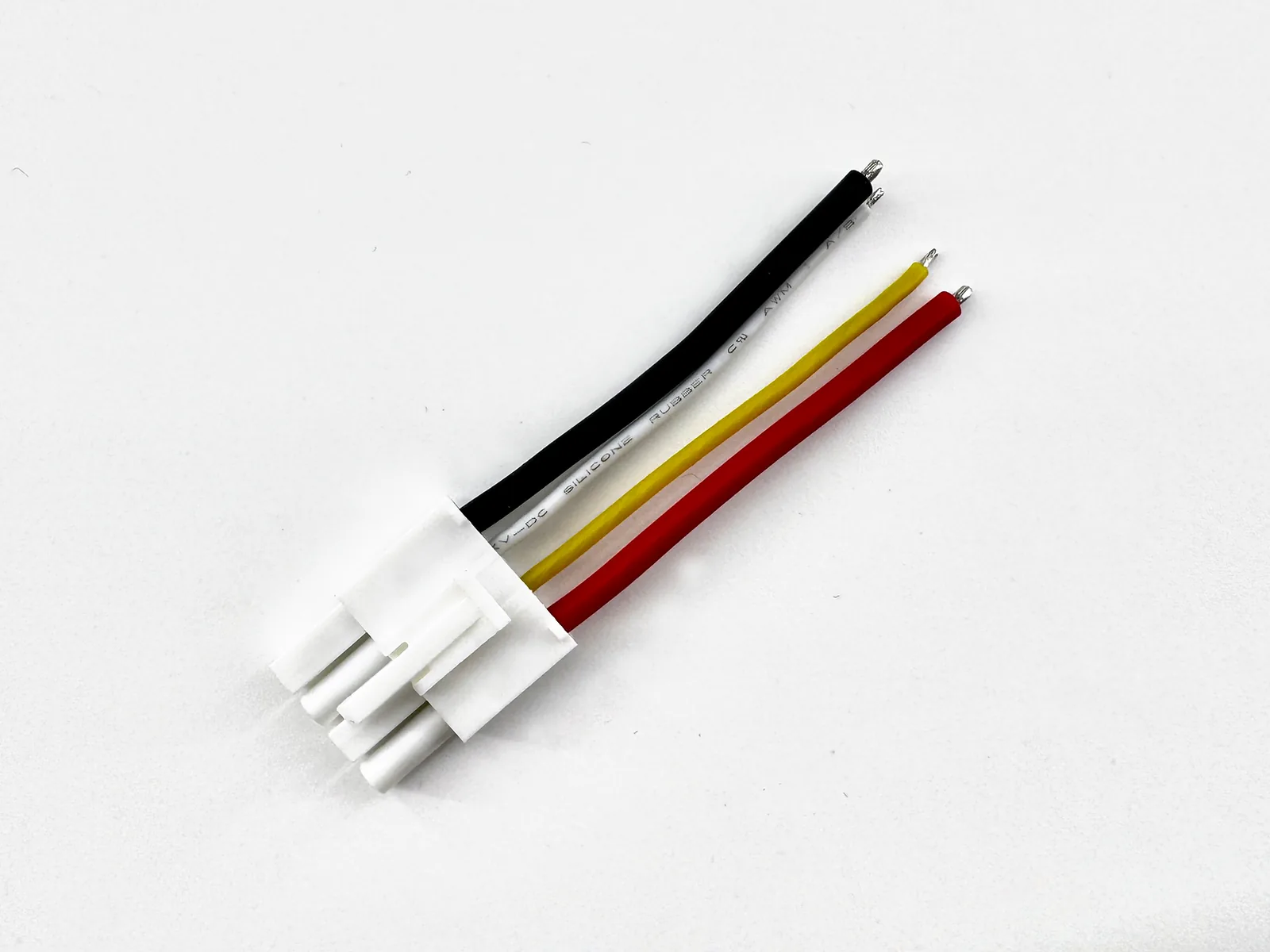
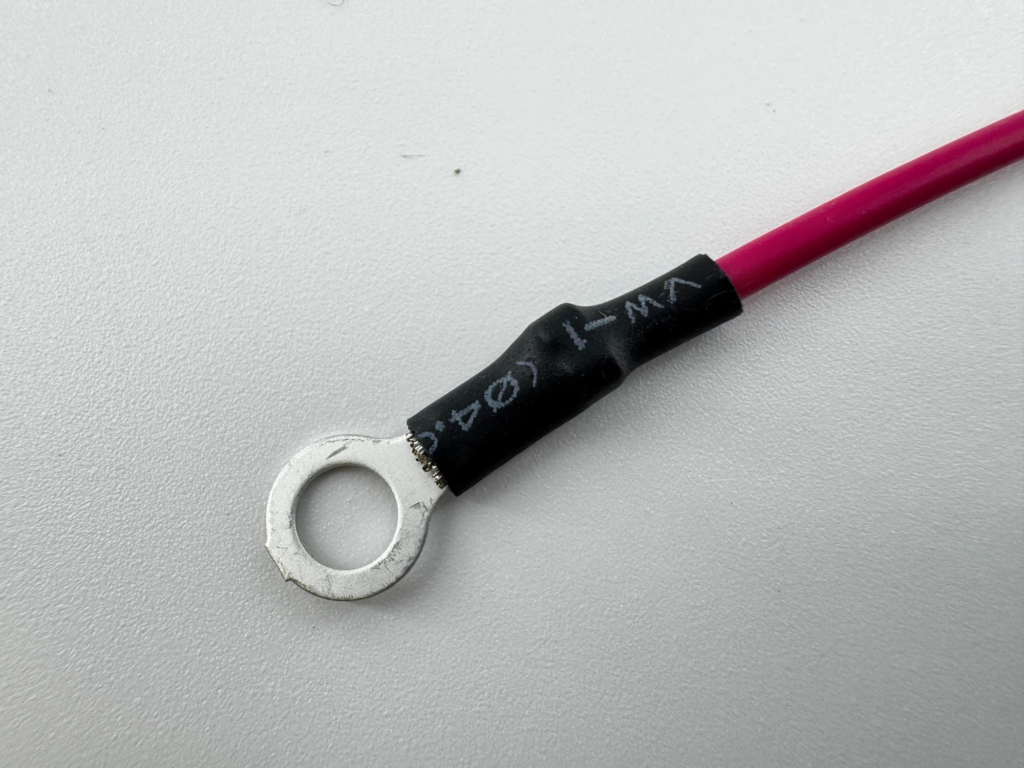
A terminal wire assembly starts with one or more individually insulated wires. The wires are cut to specified lengths, stripped and finished with crimped terminals, connector contacts or prepared ends. A contact may then be inserted into a connector housing.
A single wire with a ring terminal is one example. Another is a group of four colored wires inserted into a four-position connector. Neither needs a shared outer cable jacket or a branch layout. Depending on the supplier and drawing, you may also see names such as terminal leads, wire leads, lead wire assemblies or connector wire assemblies.
This is the center of SHENGXIN's manufacturing work: terminal leads and connector wire assemblies made to customer drawings or reference samples. The work is often decided by small details—wire length, terminal choice, strip length, crimp quality, connector cavity position and pinout.
One frequent source of mistakes is a look-alike connector. Two white housings can appear identical in a photograph but use different mating parts, contact systems, pitches or cavity arrangements. If you have an exact connector and terminal part number, include it in your RFQ. If not, send a clear photo or reference sample so the components can be checked before quotation and production.
Wire Harnesses: Wires Arranged for Installation
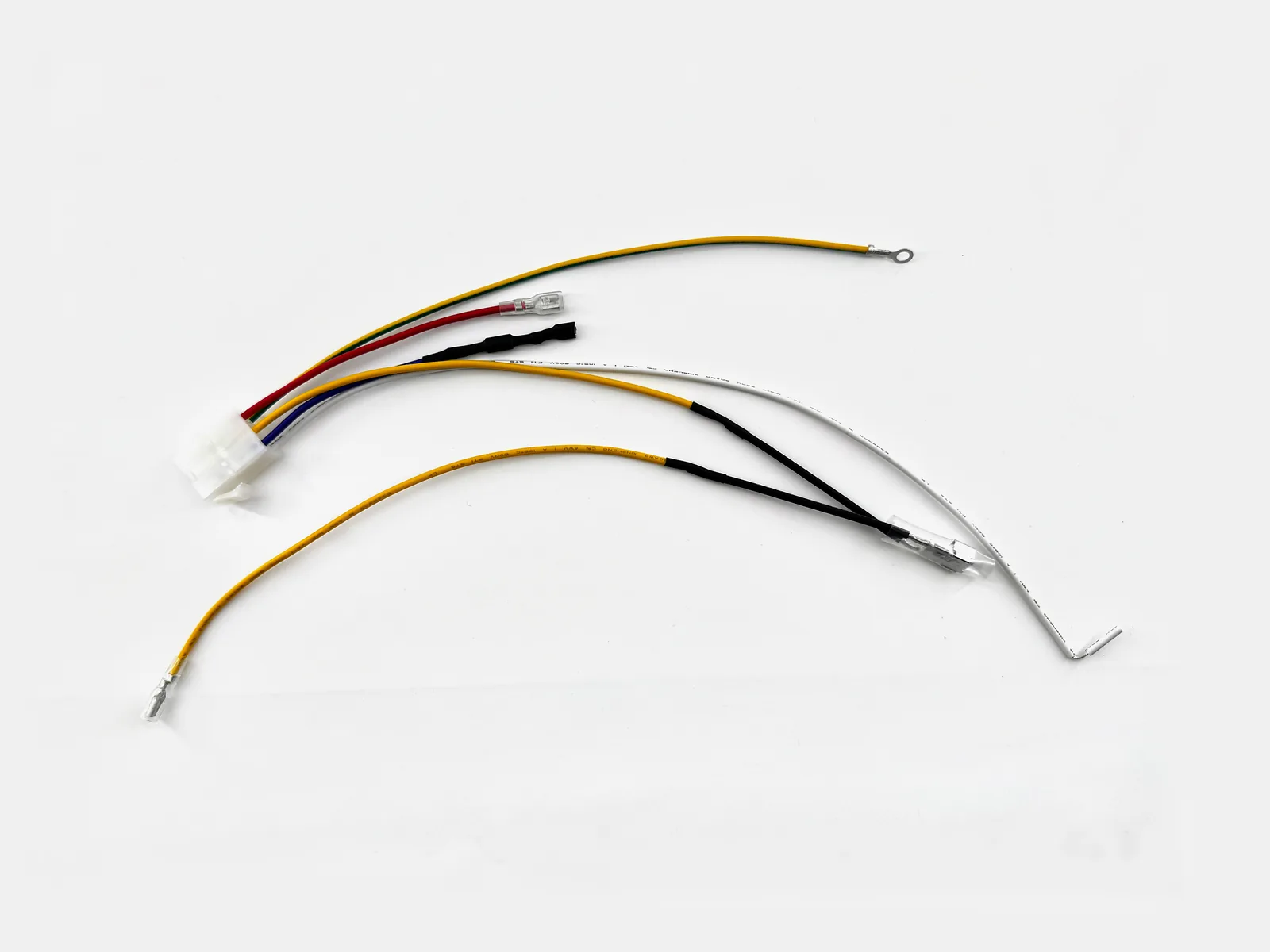
A wire harness brings wires together into an assembly that can be installed as one part. The wires may be tied, taped, sleeved or routed into branches to reach different locations in the equipment.
Not every harness is complicated or multi-branched. A short bundle connecting two components may be called a wire harness. A larger assembly can include multiple connectors, separate branches and defined routing dimensions.
For a branched harness, electrical correctness is only part of the job. The pinout can be right while the harness still cannot be installed because a branch starts at the wrong point or an individual leg is the wrong length. Its drawing must therefore describe both the circuits and the physical layout.
SHENGXIN manufactures connector wire harnesses and selected branched assemblies. Our main production focus is custom terminal and connector wire assemblies, with other harness constructions manufactured to confirmed customer drawings or samples. We manufacture to the customer's product definition and can advise on connectors, materials and manufacturability; we do not provide a from-scratch product design service.
Cable Assemblies: The Cable Construction Is Part of the Specification
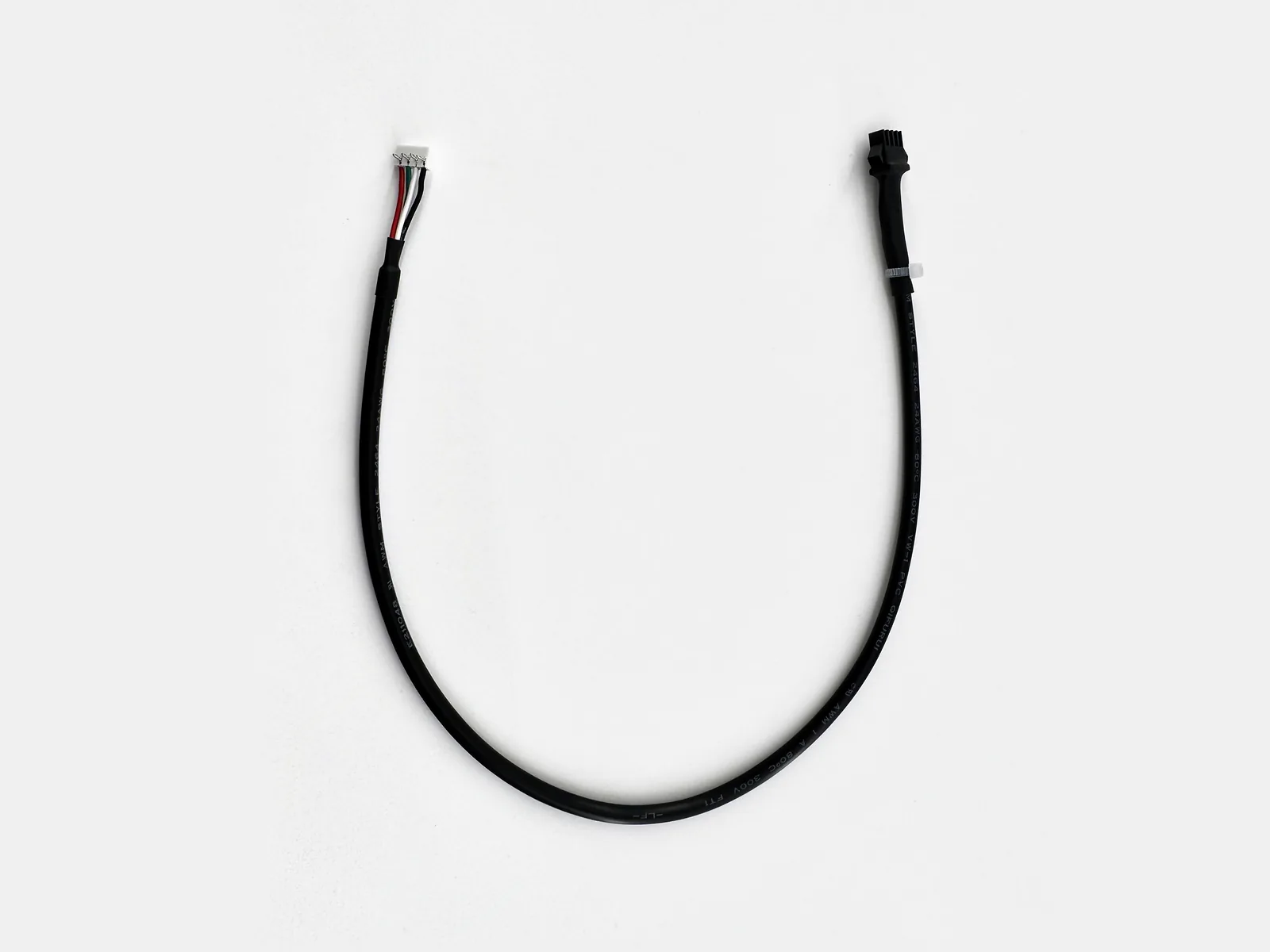
A cable assembly usually begins with a manufactured cable that is cut to length and terminated. Many use multiple conductors beneath one outer jacket, although flat ribbon cable is another familiar cable construction.
Consider a shielded multi-conductor cable with a connector on each end. Its conductor count, wire gauge, outer diameter, jacket and shield construction all affect how the ends can be prepared and which connector parts will fit. A shield may use metallic foil, a copper braid or both. Its termination must follow the drawing; simply exposing the shield is not the same as making the specified shield connection.
SHENGXIN also manufactures shielded cable assemblies. Our in-house processing includes preparing the outer jacket and internal conductors, handling foil or braided shielding, and assembling the specified end connections. The exact construction and inspection requirements come from the customer's drawing.
A cable assembly can be part of a larger harness. Conversely, some purchasers use the term cable harness for a simple terminated cable. The assembly's construction matters more than the label.
Three Constructions at a Glance
| Question | Terminal wire assembly | Wire harness | Cable assembly |
|---|---|---|---|
| Starting material | One or more separate insulated wires | Often separate insulated wires | Usually a manufactured cable, which may be jacketed, shielded or flat |
| Main assembly work | Cutting, stripping, crimping, inserting contacts into housings | Terminating, routing, bundling and sometimes branching | Preparing the cable and shield, then terminating the ends |
| Branches required? | Usually no | Sometimes, but not always | Often point-to-point; breakouts are possible |
| Typical manufacturing risk | Incorrect crimp, terminal, length or connector cavity | Incorrect routing, branch dimensions or pinout | Incorrect cable specification, jacket preparation, shield treatment or termination |
| What to specify in the RFQ | Wire, terminals, connector cavities and pinout | The same, plus route, lengths, branch locations and protection | Cable construction, shielding, breakout lengths and end connectors |
These are useful purchasing descriptions, not rigid boundaries. Four terminated wires in one connector housing might be called a terminal wire assembly by one buyer and a small wire harness by another.
What Changes in Manufacturing and Inspection?
The three constructions share some processes, but they also create different risks.
For terminal wire assemblies, attention goes to strip length, crimping, contact seating, cavity location and pinout. A continuity test can confirm an electrical path; it cannot, by itself, establish that a crimp has adequate mechanical strength.
For branched wire harnesses, inspection must also cover finished lengths, branch positions, bundling and the location of each connector. A harness can pass an electrical test and still fail to fit the equipment.
For cable assemblies, removing the jacket without damaging inner insulation and handling the shield correctly become important. The cable and connector must also be mechanically compatible.
At SHENGXIN, finished assemblies receive 100% continuity and pinout inspection. Our production controls also include first-article inspection, in-process inspection at two-hour intervals, and applicable visual and dimensional checks. Terminal pull-force and insertion/withdrawal-force checks are performed by sampling under the factory's established inspection procedures. Electrical inspection and mechanical inspection answer different questions; neither replaces the other.
For relevant wire harness work, SHENGXIN follows IPC/WHMA-A-620 requirements specified on customer drawings. The drawing and agreed acceptance requirements govern the particular assembly.
RFQ Checklist: What Should You Send?
A drawing or reference sample should help answer the following questions:
- Wire or cable: Are you using individual wires, ribbon cable or a jacketed/shielded cable? What gauge, colors and materials apply?
- Terminations: Which terminals, contacts and connector housings are needed at each end? Are any ends stripped or otherwise prepared?
- Dimensions: What are the finished lengths and tolerances? Where are any branch points?
- Pinout: Which wire connects to each connector cavity? Is there a wiring table or diagram?
- Finishing: Do you need sleeving, heat-shrink, tape, labels, shield termination or other protection?
- Inspection and quantity: What acceptance requirements apply, and what is the order quantity?
Exact part numbers help, but a clear reference sample can be enough to begin a manufacturing review. SHENGXIN can offer practical suggestions on materials, connectors and manufacturability while working from your supplied definition.
For more detail, see our custom wire harness drawing requirements guide.
Which Name Should Go on Your RFQ?
Use terminal wire assembly when the part is primarily one or more individually prepared or terminated wires. Use wire harness when wire routing, grouping or branch layout is an important part of the finished assembly. Use cable assembly when a manufactured cable's construction and end termination define the product.
The name helps route an inquiry, but it is not a substitute for the drawing, sample, connector details or pinout. Those specifications are what a manufacturer uses to review the job accurately.
Frequently Asked Questions
Can a terminal wire assembly contain several wires?
Yes. Several individually insulated wires terminated into one or more connector housings can be supplied as a terminal or connector wire assembly.
Is every wire harness a multi-branch harness?
No. A wire harness can be a simple point-to-point assembly. Branching is one possible construction, not a requirement.
Does every cable assembly have an outer jacket?
No. Many cable assemblies use jacketed multi-core cable, but flat ribbon cable assemblies have a different structure.
Is a connector wire assembly the same as a cable assembly?
Sometimes the terms overlap. Check whether the part starts with separate insulated wires or a manufactured cable, and then check how it is terminated.
Does passing continuity testing mean every feature has passed inspection?
No. Continuity and pinout tests address electrical connections. Crimp strength, connector seating, finished dimensions and branch layout require their own inspection controls.
Send Us Your Drawing or Sample
SHENGXIN specializes in custom terminal wire assemblies and connector wire harnesses and also manufactures selected cable assemblies and branched wire harnesses. We build to your drawings or reference samples and can help review material and connector choices for manufacturability.
Send your drawing or sample, wire or cable specification, connectors, lengths, pinout and quantity through our Request a Quote form. We will review the information and confirm the requirements for your project.